Military Surgical Tech - Idaho National Guardsmen from the 116th Cavalry Brigade Combat Team at the Orchard Combat Training Center, Idaho, March 30, 2022. (Major Sgt. Becky Vanshur/Army)
WASHINGTON — As the Army modernizes for large-scale, high-casualty combat, its medical field must keep pace with war.
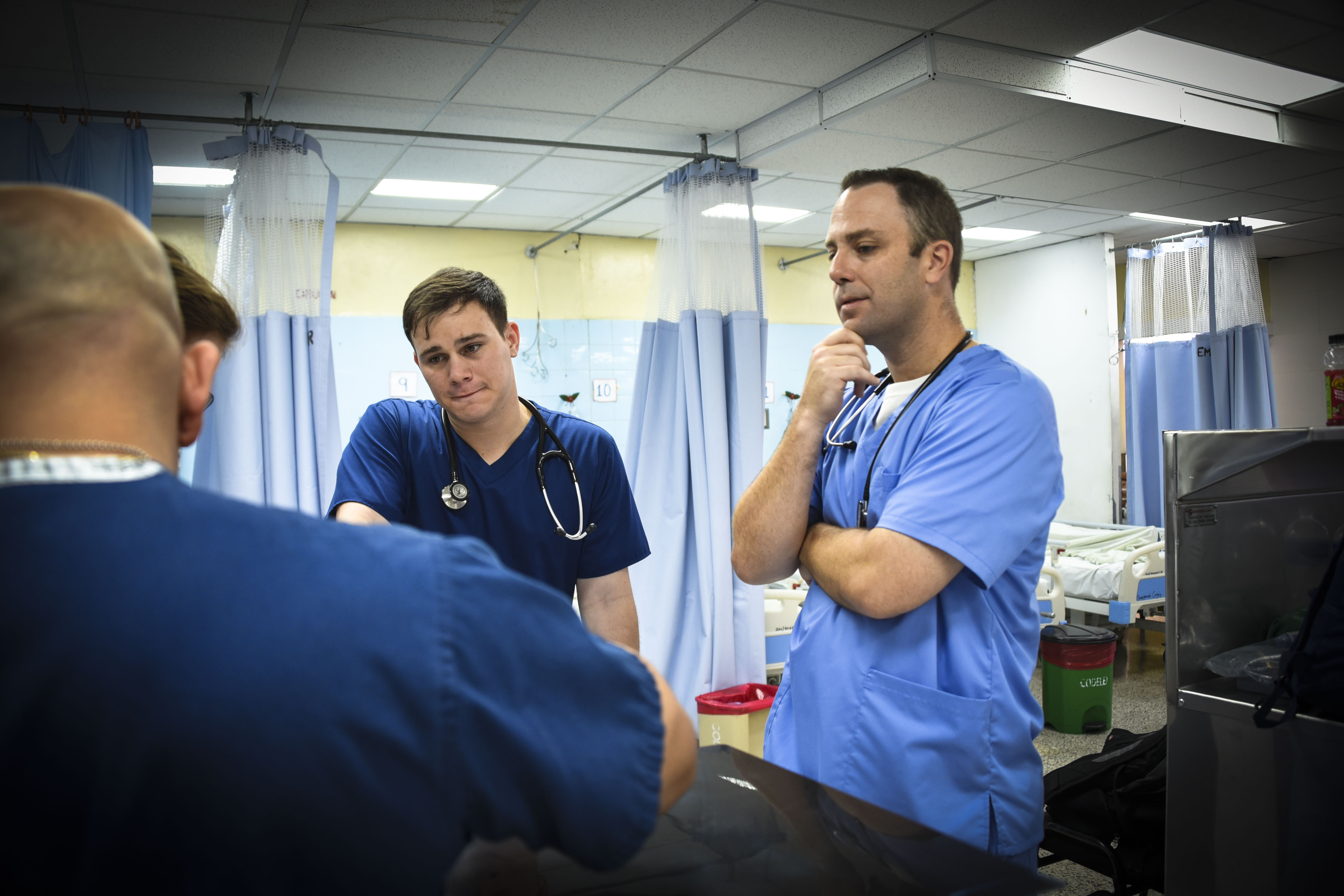
Military Surgical Tech
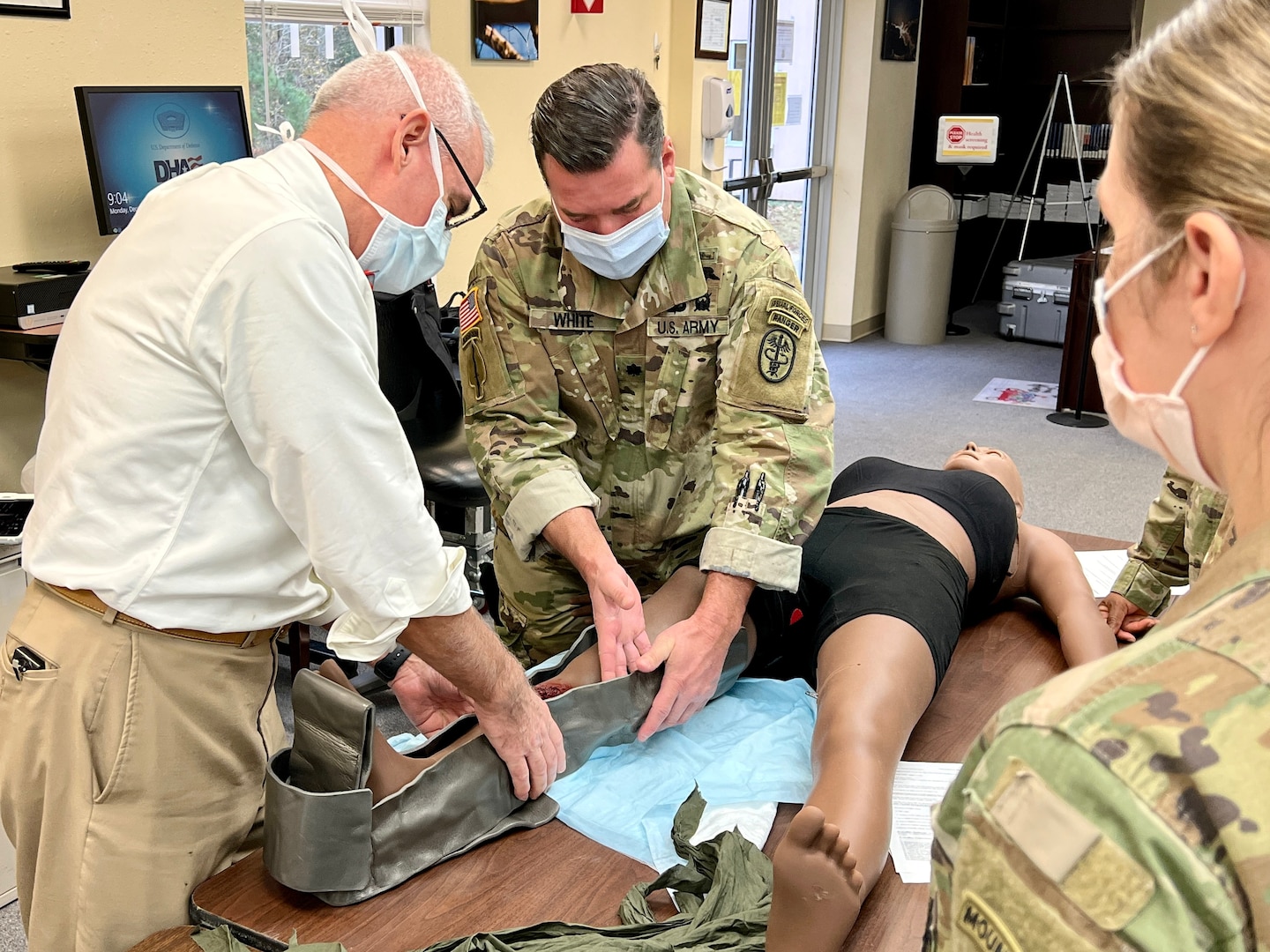
Army medical leaders have three primary responsibilities: returning wounded soldiers to combat, clearing the battlefield of resource-intensive casualties, and delivering medical resources to the front line amid challenging fort-to-port logistics.
Special Operations Surgical Team Doctor To Receive Jackson Foundation Award > Air Force > Article Display
How they will get there, senior officers explained at the annual US military conference on Tuesday, will require technologies yet to be invented and a series of experiments that began this year and will continue for the next two years.
Col. James Jones, director of medical capabilities development and integration at the Army Futures Command, outlined what future commanders will face.
"We're going to need autonomous supply, autonomous systems, AI enabled to optimize evacuation and maximize toll returns," Jones said.
In a scenario Jones shared during a panel on Army Medicine in Multi-Domain Operations, the 1st Armored Division engages in defensive maneuvers and combat.
Military Medics, Corpsmen Could Help Fill Shortage Of Primary Care Providers
They are exposed to precision attacks from the enemy with long-range missiles and self-propelled artillery. The division suffers 500 significant casualties.
In this 2030 scenario, Jones explained, a mix of pre-war labor and technology is now being developed to serve doctors and surgeons.
All vehicles are equipped with casualty evacuation kits, all non-medical troops have received advanced training in tactical combat casualty care, and autonomous robotic ground and air systems are evacuating casualties from the battlefield.
Medics in the field and surgeons on the rear lines or at Walter Reed National Military Medical Center advise telemedicine treatment.
San Antonio (feb. 28, 2019) Hospital Corpsman 1st Class Jeremiah Hays, An Instructor With The Surgical Technologist Program At The Medical Education And Training Campus (metc), And Nba Player Dejounte Murray, Perform
"If you look at the extent of our structures in the operating environment of the future, we won't be able to get a surgeon to every injury site. You can't put them in the fox," said Maj. Gen. Michael Talley, commander of the Army Medical Center.
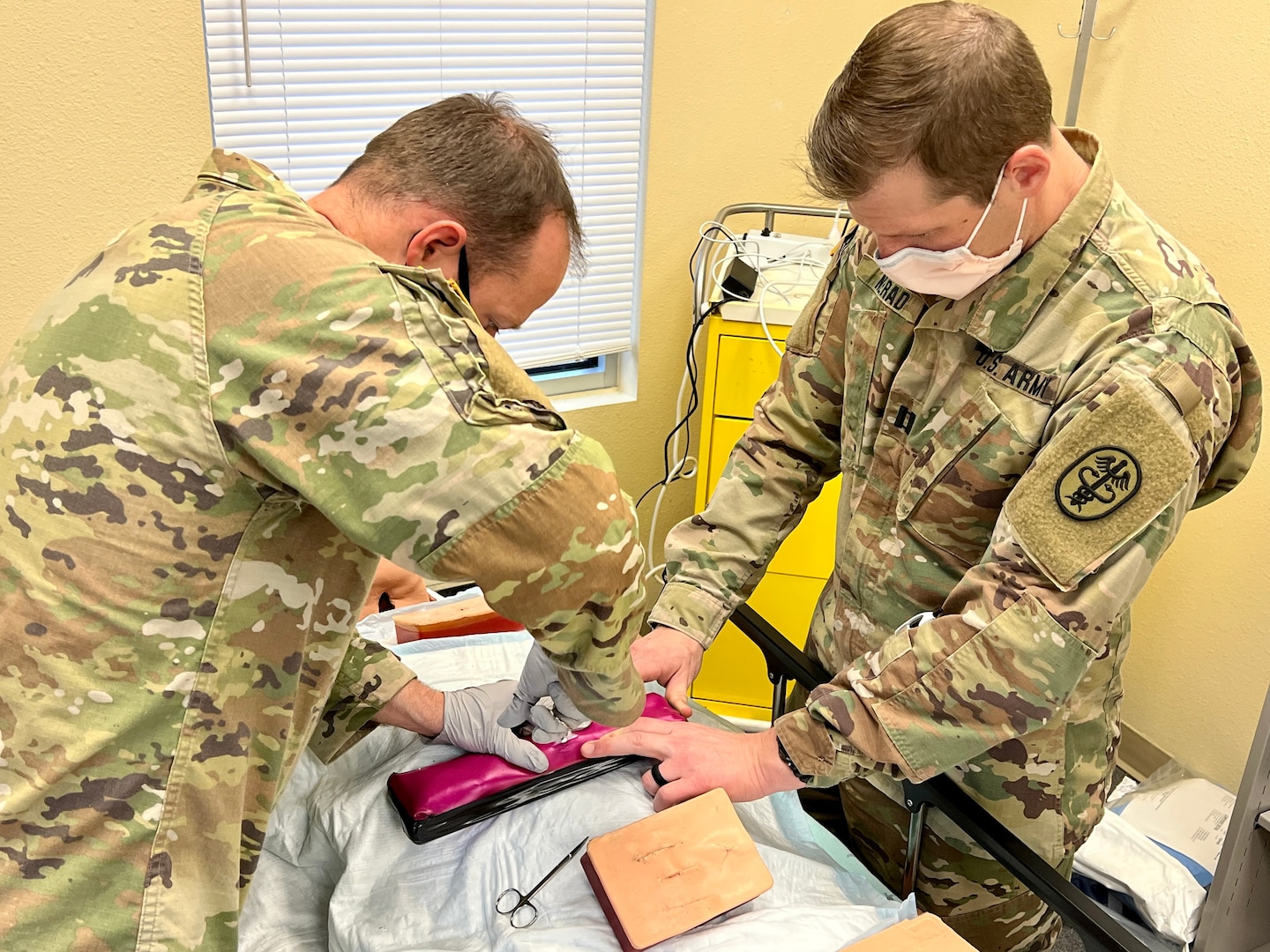
Army field hospital soldiers prepare a simulated casualty for transport during an exercise at Sierra Army Depot, Calif., on Oct. 29, 2019. (Shatyra Reed/Army Specialist)
As this wave of movement moves across the battlefield, all data is fed into an AI-powered system that provides minute-by-minute updates to commanders. The same system tells commanders what medical supplies they need and when and where they are needed.
"You can't do combat logistics if you don't know what you're dealing with," said Brig. Gen. Tony McQueen, commanding general of the Army Medical Research and Development Command.
Future Army Medics Will Lean Hard On New Tech To Help Mass Casualties
According to McQueen, the system will automatically detect what medical products soldiers are using and replenish those stocks as they are used, allowing more supplies to flow to the front lines.
Achieving the challenging but desirable future for Army medicine, officials stressed, requires medics to perform even seemingly simple tasks, such as evacuating casualties from every exercise.
That's why Army Medicine has featured experts on standard Army and joint exercises starting this year. They also start their own drug-oriented experiments to see what works and what doesn't.
:max_bytes(150000):strip_icc()/182028906-56a46dde5f9b58b7d0d6f369.jpg "Military Surgical Tech")
Casualty evacuation simulations, long-term care experiments and arctic medicine experiments are planned for the next two years, Jones said.
Surgical Strike Day 2022: All About India's Response To Pakistan On Uri Terror Attack, And Top Quotes By Pm Narendra Modi
Army medics and battlefield surgeons are increasingly expected to rely on cloud-based systems to store and transmit medical data. This information is sent from sensors used by soldiers and aerial drones to scan war-torn areas and then sent back to experts in the US.
Talley shared another scenario in which a battlefield medic could go online and use the Army's mixed-reality glasses, called the Integrated Visual Augmentation System, to talk to a surgeon at Walter Reed about a difficult procedure, like cutting a incision. warrior belly to heal internal wounds.
Soldiers from the 82nd Airborne Division test IVAS goggles during a training exercise in October 2020 at Fort Pickett, Virginia. (Bridget Seiter/Army)
This surgeon can see and guide the doctor with augmented reality tools, which the soldier can see superimposed on the patient. Such tasks require a high level of training for future combat medics and a strong network to support such information sharing.
Surgical Tech To Surgeon: How Are They Different?
These medics must be able to quickly triage patients and provide advanced combat medical care, while keeping patients in long-term care unusual in recent wars.
Getting the wounded out of combat and back into advanced treatment won't be as easy as in Iraq and Afghanistan. Air evacuations are controversial, and soldiers are sometimes forced to rely on ground systems or wait to prolong the lives of patients.
The Army does not want to commit its limited number of human pilots or drivers to risky recovery missions. They rely on robotic ground and air vehicles to evacuate the wounded from battle.
“We are looking at all the evacuation sites that we don't have today and that we might have in the future,” Jones said.
Or Techs Take Madigan's Graduation Stage
The Army Times recently reported on work being done at the Maneuver Warfare Laboratory at Fort Benning, Georgia, that demonstrated an autonomous drone that carried a 70-pound dummy 2.5 miles in four minutes.
Also at AUSA this week, one of the winners of the xTechSearch contest, a program that seeks technology solutions from small businesses, presented a "smart shirt for wound detection." The shirt has a woven mesh of sensors inside the combat shirt or jacket that can immediately report a hole greater than 2mm wide.
The jersey's developer, Legionarius, is adding "bladders" to the jersey that can instantly compress wounds and stop bleeding.
Todd South has written about crime, courts, government, and the military for various publications since 2004, and in 2014 he was named a Pulitzer Finalist for a co-authored project on witness intimidation. Todd is an Army veteran of the Iraq War.
Transformation Of Combat Casualty Care, Advances In Military Healthcare Focus Of New Book
Tags: army mass casualty large scale combat operation golden hour army medicine army combat medic training army health system army future medicine army medical weapons autonomous casualty evacuation ausa 2022
An even bigger turnover this session of the House Veterans Affairs Committee will be the panel's 13 new faces this year, more than half of its total membership.
New evidence reveals that he was a prisoner of war before his death in the Korean War. Initial evidence or witness statements did not indicate his prisoner status.
Cosmas D., the 108-year-old original Montford Point Marine who was honored for his service. Eaglen Sr. Awarded for years of service in three military conflicts.
Reasons To Consider A Career In Surgical Technology
The main leader of the "Islamic State" was killed in the US military operation in Somalia. No US soldiers or civilians were injured in the operation.1 / 2 Caption + Hide Caption - After the meeting, Navy and Air Force surgeons and a medical assistant met with the hospital command team. (From left to right) Col. Alfonso Alarcon, BDAACH orthopedic surgeon, Maj. Harry Aubin, BDAACH surgeon general, Command Sgt. Major Nick... (Photo credit: USA) VIEW ORIGINAL
2 / 2 Show Caption + Hide Caption: This tri-service OR event showcased the camaraderie and strong relationships formed between surgical personnel from three different military services. Surgeons have expressed how impressed they are with the large space in the operating room that helps them maneuver... (Photo credit: USA) SEE ORIGINAL
US GARRISON HUMPHREYS, PYONGTAEK, SOUTH KOREA -- Brian D. On the opening day of the Allgood Community Hospital (BDAACH) and Outpatient Clinic, six military surgeons general (three, two from the Navy and one from the Air Force ) and an Air Force physician assistant performed surgeries together. Center of Care, November 15, 2019. They saw state-of-the-art surgical systems in a state-of-the-art facility with larger and more spacious operating rooms. The event showcased the strong network and cooperation among the three surgeon generals serving on the Korean Peninsula to enhance the readiness of US military forces in the Pacific region.
Three service providers met in an operating room (OR) early in the morning. General Surgery had the honor of performing the first operation in the new operating room. Each of the three general surgeons assigned surgeons from other services to assist in their operations around the clock.
The Us Military Is Trying To Read Minds
LCDR Dan Sanford and LCDR Paul Lewis, Army Surgeons General assigned to Medical Battalion 3, Okinawa, Japan, shared their impressions of the new facility after the assembly. Sanford expressed how impressed he was with the large space in the operating room, which helped him maneuver during procedures. Lewis and Sanford praised the state-of-the-art system with built-in cameras that allow for monitoring of operating rooms.
"This new facility looks great and everything is state of the art, a great space to work in the OR. I'm looking forward to my first day in the new facility," Sanford said. "I've heard that this new facility will have a Da Vinci robotic surgery system, and I think it's wonderful to have such high-tech capabilities. It's the only facility in the Pacific that has this capability."
"From a surgical perspective, it's encouraging for us. I'm impressed with the high-tech systems, but
Post A Comment:
0 comments so far,add yours